Power of attorney, certification and apostille in Bosnia
A Bosnian property power of attorney must be certified like the sale contract: at a BiH notary, a BiH consulate, or a foreign notary plus apostille.
Updated: 19 October 2026
A power of attorney (punomoć) to buy or sell property in Bosnia and Herzegovina cannot be an informal signed letter. It must take the same form required for the sale contract itself, so in BiH it is normally drafted or certified by a notary. If you live abroad, you can have it certified at a BiH embassy or consulate, where no apostille is needed, or before a local notary, after which it needs an apostille.
The rules differ between the Federation of BiH (FBiH), Republika Srpska (RS) and Brčko District, and in FBiH even legal experts do not fully agree. The most useful step is therefore simple: before you sign anything, ask the notary who will handle the contract in BiH which form and wording they accept. This page is general information, not legal advice; a notary or lawyer confirms the details for your specific case.
Why an ordinary power of attorney is not enough
The Law on Obligations (Zakon o obligacionim odnosima), as lawyers read it, says that a power of attorney to conclude a transaction must have the form required for that transaction. A property sale contract has a special form, so the power of attorney must have it too. A handwritten or typed document that is simply signed, without certification, will not be accepted by a notary or by the land registry office.
Which form applies where
Republika Srpska
Under the earlier RS Law on Notaries, transfers of rights in real estate required notarska obrada (notarial drafting, where the notary prepares the deed and the parties sign before them). A transaction without it was void. The RS Supreme Court applied this rule, and the RS Constitutional Court dismissed a challenge to it. According to available sources, the newer Law on Notarial Service of RS (2021) keeps mandatory notarial drafting. Assume that a power of attorney for buying in RS also needs to go through a notary, and confirm the exact form with the notary.
One practical point: in RS the notary can file for entry in the land register without a separate power of attorney if the parties authorise them to do so in the contract or another notarial deed.
Federation of BiH
The FBiH Law on Notaries made notarial drafting mandatory for transfers of ownership of real estate. The FBiH Constitutional Court declared that provision (Article 73) unconstitutional in a judgment of December 2015, and according to a later decision of the same court, that judgment was only carried out in May 2018. Since then, interpretations have differed:
- some sources say notarial drafting of the contract is still required,
- others say that for registration it is enough for a notary or a court to certify the parties' signatures, so a lawyer can draft the contract.
There have also been proposed amendments introducing notarial confirmation (solemnizacija) of contracts, but their status is not confirmed. Sales are often done at a notary, but check with a notary or lawyer which form applies to your contract, and therefore to your power of attorney, before you sign.
Brčko District
The Brčko District Law on Notaries, like the entity laws, requires notarial drafting for real estate transactions, on pain of nullity. Lawyers may prepare documents and represent parties before a notary, but plan for the power of attorney to go through a notary.
What the power of attorney should contain
A notary may refuse a power of attorney that is too general. In practice, a property power of attorney should include:
- full details of the person granting it: name, JMBG (the Bosnian personal identification number) or passport number, and address,
- the same details for the agent,
- an exact description of the property: type (flat, house, land), location, parcel number or details from the land register extract, and for a flat the floor and area,
- explicitly named powers: to buy or sell, sign the contract (and a pre-contract if there is one), act before the notary and the land registry office, and pay or receive the purchase price,
- optional limits: a maximum price, a validity period, or a ban on passing the power to someone else.
Copy the property details from a current ZK izvadak (land register extract), not from the advert. Our guide to the land registry extract explains how to read one.
We did not find a rule on how old a power of attorney may be. If yours was issued some time ago, ask the notary whether they will accept it.
Who certifies the power of attorney
In Bosnia and Herzegovina
Notaries draft documents and certify signatures. In FBiH, courts also certify signatures under the Law on Certification of Signatures, Handwriting and Copies. It is not certain that a power of attorney certified by a court or municipality is enough for a property transfer, so for a purchase plan on using a notary.
At a BiH embassy or consulate (BiH citizens)
If you hold a valid BiH passport or identity card, you can have your power of attorney certified at a BiH diplomatic or consular office. You must attend in person. Examples from official pages:
- BiH General Consulate in Frankfurt: signature certification on a power of attorney costs 15 EUR; a valid BiH passport or ID card is required.
- BiH Embassy in Oslo: identity is checked with a BiH passport, ID card or driving licence; the fee is charged in NOK per signature under the consular fee tariff.
- BiH Embassy in Canberra: 25 AUD for a power of attorney, but the document is first signed and certified before a Justice of the Peace acting as witness.
Fees and conditions change, so check your consulate's website before booking. Importantly, we found no official source confirming that a consular signature certification satisfies the notarial drafting requirement in RS and Brčko District. Send the text to the notary in BiH before you go to the consulate.
At a foreign notary, with an apostille
If you are not a BiH citizen, or have no valid BiH documents, you sign before a notary where you live, and the competent authority of that country then adds an apostille (an international certificate confirming the notary's signature and seal). You then do not need the embassy at all. Examples of competent authorities:
- Germany: the Regierung (regional government),
- Norway: the Statsforvalteren (county governor),
- Iceland: the Ministry for Foreign Affairs,
- Australia: DFAT,
- New Zealand: the Department of Internal Affairs.
For the UK, the Netherlands, Sweden or the USA, check which authority issues apostilles locally; our notes do not cover them.
Language and translation
The power of attorney must be in Bosnian, Croatian or Serbian. If it is in English or another language, an authorised translator must translate it, and in practice a BiH court interpreter (sudski tumač) is used. The simplest route is a bilingual document, or one written in one of the local languages from the start, using wording already approved by the notary in BiH.
When you need an apostille
BiH is a party to the 1961 Hague Apostille Convention. What you need depends on where the document was produced.
Certified at a BiH embassy or consulate. This is a BiH document, and the consulate pages do not ask for an apostille.
Certified by a foreign notary. It needs an apostille from the country where it was certified, if that country is a Convention member. If not, full legalisation is needed: certification by that country's foreign ministry and then by the BiH embassy there.
No apostille under bilateral treaties. Documents from Croatia and Serbia need no apostille under treaties BiH concluded itself. The same applies to countries with which the former Yugoslavia concluded treaties that BiH took over by succession. The part of that list we could see includes, among others, Austria, Belgium, Greece, Italy, Cyprus, Hungary, Poland, Romania, Russia, Slovakia, Turkey and Ukraine. For Slovenia and North Macedonia, sources disagree: the courts in Bugojno and Tuzla say no apostille is needed for Slovenia, while an older law-firm source says the treaties with Slovenia and Macedonia had not been ratified. The list we saw is incomplete, so check your country with the notary or a court in BiH.
BiH documents for use abroad (for example, if you need a Bosnian document for an authority in your home country): apostilles are issued by municipal courts in FBiH and, according to available sources, basic courts in RS. Each court only handles documents from authorities in its own area. The Municipal Court in Tuzla usually issues them the same or the next working day.
Common mistakes
- A power of attorney without an exact property description or without the power to pay the price, so the notary asks for a new one.
- Certifying at a consulate or foreign notary before the BiH notary has approved the text.
- A foreign-language document without a certified translation.
- Adding an apostille where it is not needed, or leaving it out where it is. Both cost time.
- A very broad power of attorney with no price limit, given to someone you do not fully trust.
- Assuming the same form applies in Sarajevo, Banja Luka and Brčko.
Example: buying a flat in Sarajevo from Germany
Amra lives in Germany, holds a valid BiH passport and wants to buy a 59 m² two-room flat in Grbavica listed at 359,000 KM. Her brother in Sarajevo will sign for her.
- She first checks the land register extract and the legalisation status of the flat.
- The Sarajevo notary who will draw up the contract tells her which form of power of attorney they accept and sends or approves the text.
- The text includes her and her brother's details, the flat's details from the extract, the power to sign the contract, pay the price and act before the land registry office, and a maximum price.
- Amra goes in person to the BiH General Consulate in Frankfurt with her passport and pays the signature fee (15 EUR according to the consulate's page). No apostille is needed because it is a BiH document.
- She posts the original to her brother, and the notary attaches it to the contract.
If Amra had no BiH documents, she would go to a German notary, then to the Regierung for an apostille, and the document would need to be in a local language or translated.
The full process is in our guide to buying property in Bosnia from abroad, and notary and tax costs are covered in costs of buying property in Bosnia.
How DMI helps
We visit every property in our listings in person and check its land register, legalisation and photos before publishing. All eight current listings are in Sarajevo, mostly two- and three-room flats, with a median asking price of about 5,722 KM per m². We offer video tours to buyers abroad, and before you certify a power of attorney we help make sure the property details and wording are agreed with the notary handling the contract, so you do not have to repeat the certification.
Current listings
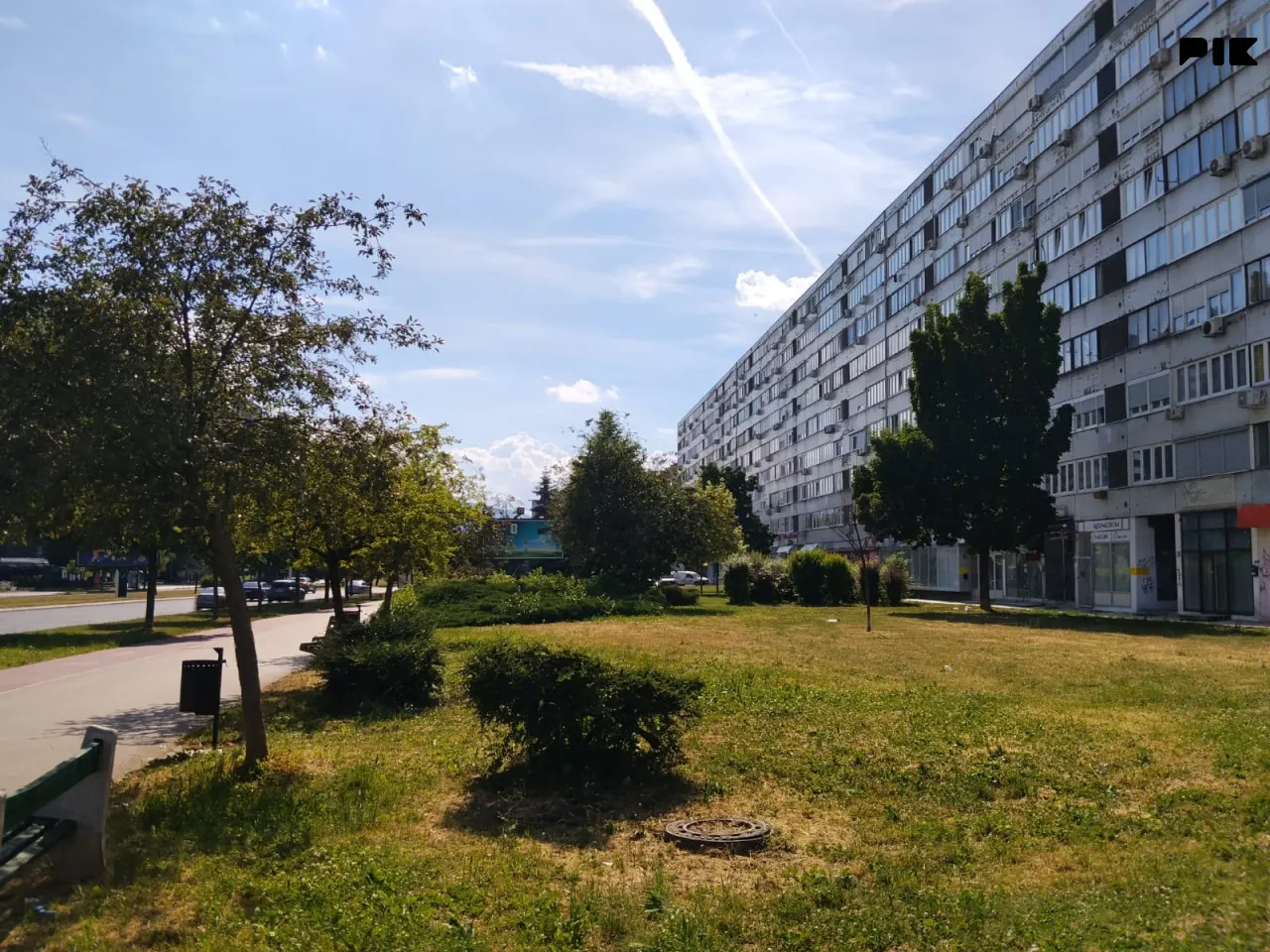
Sarajevo, Čengić Vila
Two-room flat, 54 m², 2nd floor, Čengić Vila - Stometarka
Sarajevo, Dobrinja C5, Novi Grad