Negotiating with buyers in Bosnia without losing on price
Set your minimum before listing, answer the first offer with a precise counter-offer, tie every concession to something in return and get it in writing.
Updated: 19 October 2026
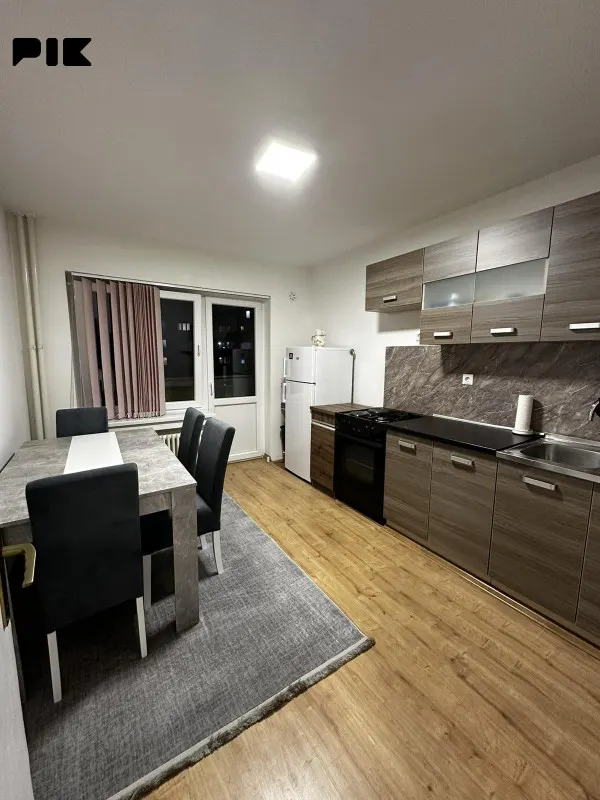
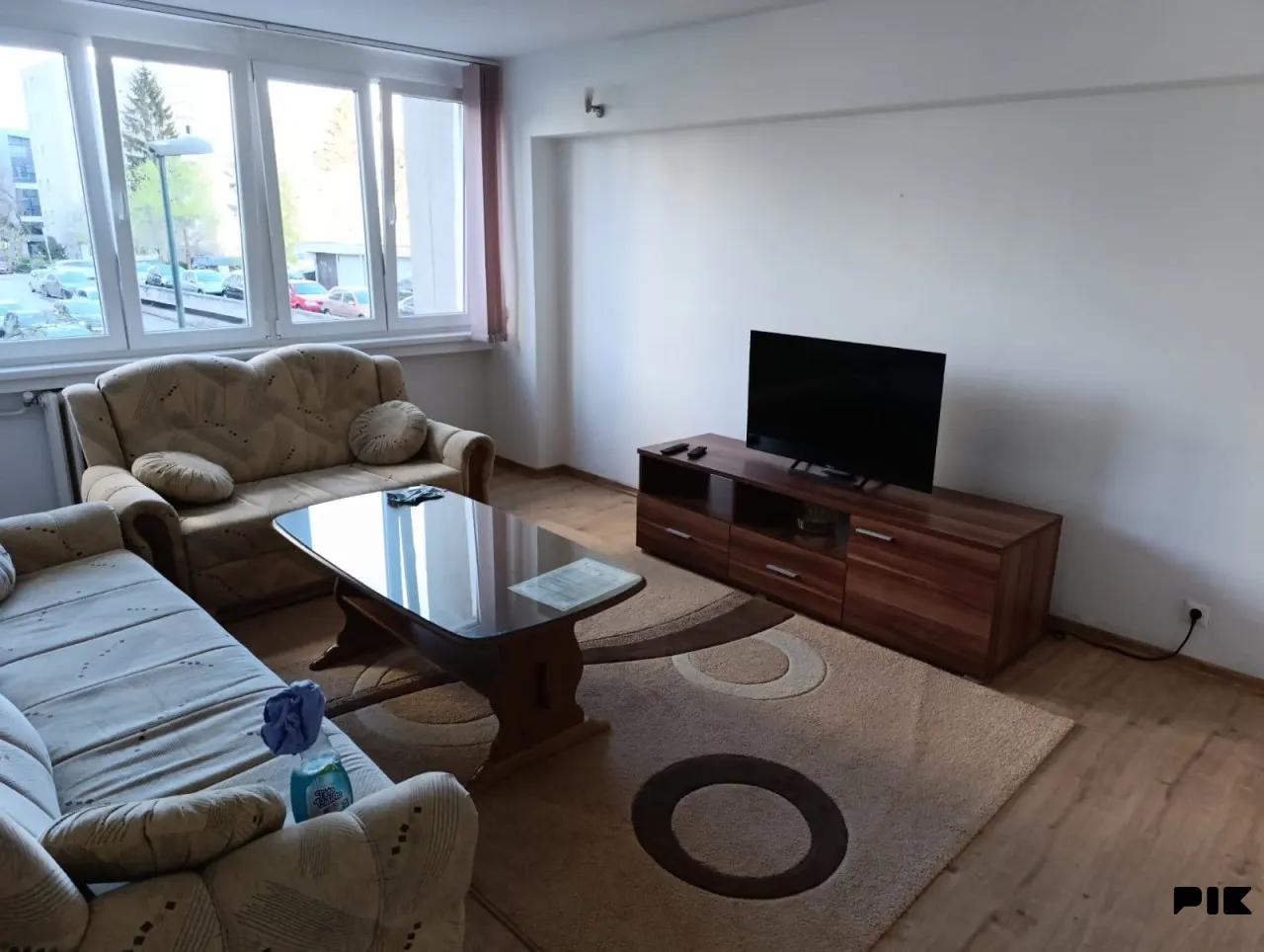
Sellers usually lose money in the first few messages with a buyer. They give a discount too quickly, have not worked out their own minimum, or agree to something over the phone that the buyer later treats as a promise. You keep the most if you set your price and minimum before listing, answer the buyer's first offer with a precise counter-offer, make each concession smaller than the last and tie every one to something you get back. Then write the deal down and leave the legal form to a notary.
This is general information, not legal advice. A notary or lawyer in Bosnia and Herzegovina (BiH) confirms the details for your specific case.
Before the first offer: know your minimum
Negotiation starts before any buyer gets in touch. Before the listing goes live, write down three figures:
- Asking price - what you ask and can justify.
- Target price - a realistic figure you would be happy with.
- Minimum - the figure below which you will not sell. Work it out by deducting the costs you will carry (for example paying off a mortgage, agency commission, any taxes) and looking at what is left in your pocket.
Do not reveal your minimum, even indirectly. Lines such as "I need to sell by the end of the month" or "I have already bought another flat" sound to a buyer like an invitation to offer less. If you live abroad and want to sell quickly before a trip home, keep that to yourself too.
Base the asking price on comparable flats, not on how you feel about your home. As a rough guide, the median asking price across seven current DMI listings in Sarajevo is 5,722 KM (convertible marks, the local currency) per m², ranging from 3,667 KM to 6,574 KM per m². These are asking prices, not achieved prices, and the sample is small, so treat them as a frame only. The spread within one city is wide: a two-room flat of 54 m² in Čengić Vila is listed at 309,000 KM on the 2nd floor and 339,000 KM on the 4th, depending on condition and fittings. Official statistics on average prices mostly cover new builds, not resale flats. Our guide on how to price a property for sale in Bosnia goes into this in detail.
Get your paperwork ready before the first viewings: the ZK izvadak (land registry extract showing ownership and any burdens), proof of etažiranje (the flat being registered as a separate unit in the land registry) and of legalisation, and figures for running costs. Any gap a buyer finds in the papers becomes an argument for a discount.
Listings, offers and what binds you
Under the Zakon o obligacionim odnosima (Law on Obligations), which applies in essentially the same form in the Federation of BiH (FBiH), Republika Srpska (RS) and Brčko District, an advertisement is generally treated as an invitation to make an offer, not as a binding offer. It can be different when you send a specific buyer a concrete proposal naming the property and the price. As a rule, such an offer may bind you for a period of time unless you excluded that in advance.
In practice:
- In any written message with a price, add a deadline, such as "this offer is valid until Friday", or state that it is non-binding.
- If you change your mind, tell the buyer straight away. A withdrawal is usually effective only if it reaches the buyer before or at the same time as the offer, so avoid firing off figures in a hurry.
- Do not negotiate just to test the market if you have no intention of selling. The law provides for possible liability for damages when someone negotiates without intending to conclude a contract, or breaks off talks without good reason. Whether and how that applies is for a lawyer to assess.
The counter-offer: how to answer the first offer
Buyers almost always offer less than the asking price. That is not an insult; it is how the conversation starts.
Do not accept on the spot
Even when the first offer is close to your target, a quick yes tells the buyer they could have offered less, and often invites a fresh round of discount requests at the end. Thank them and say you will reply by an agreed time.
Ask how they got there
"How did you arrive at that figure?" The answer tells you what bothers the buyer: old windows, a floor without a lift, renovation costs. Answer a concrete argument concretely, for example by offering to leave appliances rather than lowering the price.
Reply with a precise figure
A counter-offer of 293,500 KM looks more considered than a round 290,000 KM and is less likely to trigger "let's meet halfway". Round numbers prompt the buyer to ask for the next round number down.
Know what happens legally
When a buyer "accepts" your price but adds a change (a lower figure, a different date, a condition), the law generally treats this as rejecting your offer and making a new one. For you, this means that after the buyer's counter-offer you are no longer bound by your earlier figure: you can hold it or change it. In any case, a property sale is not concluded by exchanging messages, only in the required form before a notary.
What is a reasonable discount
There is no official data on how far final prices in BiH typically fall below asking prices, so treat any "usual percentage" with caution. How much it is reasonable to give depends on:
- time on the market - a flat listed two weeks ago is in a stronger position than one listed six months ago;
- number of interested buyers - with several serious buyers you have no reason for a large concession;
- real defects - if the buyer shows a defect you had not priced in, part of a discount is justified;
- quality of the buyer - cash or an approved mortgage is worth more than uncertain financing.
Three rules for concessions
- Every concession for something in return. Never lower the price just because the buyer asked. Ask for something back: proof of funds, a shorter deadline for the deposit, a handover date that suits you.
- Shrinking steps. If your first concession is 4,500 KM, the second should be smaller and the third smaller still, or none. The buyer then sees you are approaching your limit.
- A discount does not have to come off the price. Giving something else is often cheaper than lowering the figure.
Concessions that are not price
- leaving the kitchen, air conditioning or furniture;
- covering part of the costs, such as commission or the notary fee, if you agree to;
- a handover date that suits the buyer;
- a smaller deposit for a buyer whose mortgage is still being processed.
Who pays which cost is not the same everywhere. In FBiH, transfer tax is set by each canton and is usually paid by the buyer; the rules differ in RS and Brčko District, so check before offering a cost as a concession. See costs of buying property in Bosnia for an overview.
The written agreement: what to record and in what form
Once you agree, summarise everything straight away in one written message or document that both sides confirm. Include:
- the exact price and currency;
- what is included (kitchen, built-in wardrobes, garage, storage room);
- the deposit amount, payment deadline and how the balance will be paid;
- who pays which costs: transfer tax, notary, registration, commission;
- the deadline for signing the main contract and the handover date;
- what happens if the buyer's bank does not approve the mortgage.
That summary records the agreed terms, but it is not a sale contract. Under the notary laws of FBiH, RS and Brčko District, a contract transferring ownership of real estate generally has to be a notarski obrađena isprava (a document drawn up by a notary), and without that form there is a serious risk it has no legal effect. A predugovor (pre-contract) is in practice generally expected to take the same form as the main contract, so it is usually also drawn up by a notary. Ask the notary to confirm how this applies to your case.
A kapara (deposit) is usually treated in law as a sign that the contract has been concluded, and it counts towards the price. The common rule is that the seller keeps the deposit if the buyer walks away, and the buyer can claim double if the seller walks away; a court can reduce a deposit that is excessive. An odustanica (withdrawal fee) is something else: a sum agreed in advance as the price of pulling out. These rules should be confirmed with a notary or lawyer for your deal. What happens to a deposit paid under an agreement that was not drawn up by a notary is not clear-cut, so avoid such payments before the notary stage or check with a lawyer first. More in our guide to the pre-contract and deposit (kapara).
A worked example
A seller lists a two-room flat of 54 m² at 298,000 KM. Their minimum is 285,000 KM and their target 290,000 KM.
- Buyer's first offer: 270,000 KM, arguing the windows are old. The seller does not accept on the spot, asks exactly what the buyer plans to replace, and replies the next day.
- Seller's counter-offer: 293,500 KM, provided the buyer shows proof of funds or a bank's mortgage approval. The 4,500 KM concession is tied to certainty that the buyer can pay.
- Buyer: 280,000 KM, with proof of mortgage approval.
- Seller: 289,700 KM, if the buyer pays the deposit at the notary within seven days and accepts handover in 60 days, when the seller moves into their new flat. The 3,800 KM concession, smaller than the first, buys speed and a date that suits the seller.
- Buyer asks for 285,000 KM. The seller does not lower the price but offers to leave the kitchen and air conditioning at 289,700 KM, or alternatively 287,400 KM without them.
- Buyer chooses 289,700 KM with the kitchen and air conditioning. The terms are written down and both go to the notary.
The total price discount is 8,300 KM, both price steps got something in return, and the third request was met with fittings the seller does not need in the new flat.
The most expensive mistakes
- Agreeing by phone in the first call, before you have thought it through.
- Revealing time pressure: a move, a mortgage, heirs in a hurry.
- Dropping the price by the same amount more than once, so the buyer expects another identical step.
- Unspoken costs: an agreed price with no agreement on who pays the notary, tax and commission.
- Taking money without a notary, or on the basis of a message that is not a notarial document.
- Unfinished paperwork: unregistered etažiranje or incomplete legalisation almost always ends in a discount.
How DMI helps
DMI negotiates on the seller's behalf. We agree the asking price and your minimum with you in advance, pass on buyers' offers in writing and answer with counter-offers so that every concession earns something back. We visit every property in person before listing and check the land registry extract, legalisation and photos, which leaves buyers fewer paperwork reasons to ask for a discount. We offer video tours to buyers abroad, which widens the pool of serious buyers, and we prepare the agreed terms for the notary. If you are thinking of selling, including from abroad, get in touch through Sell your property.
Current listings
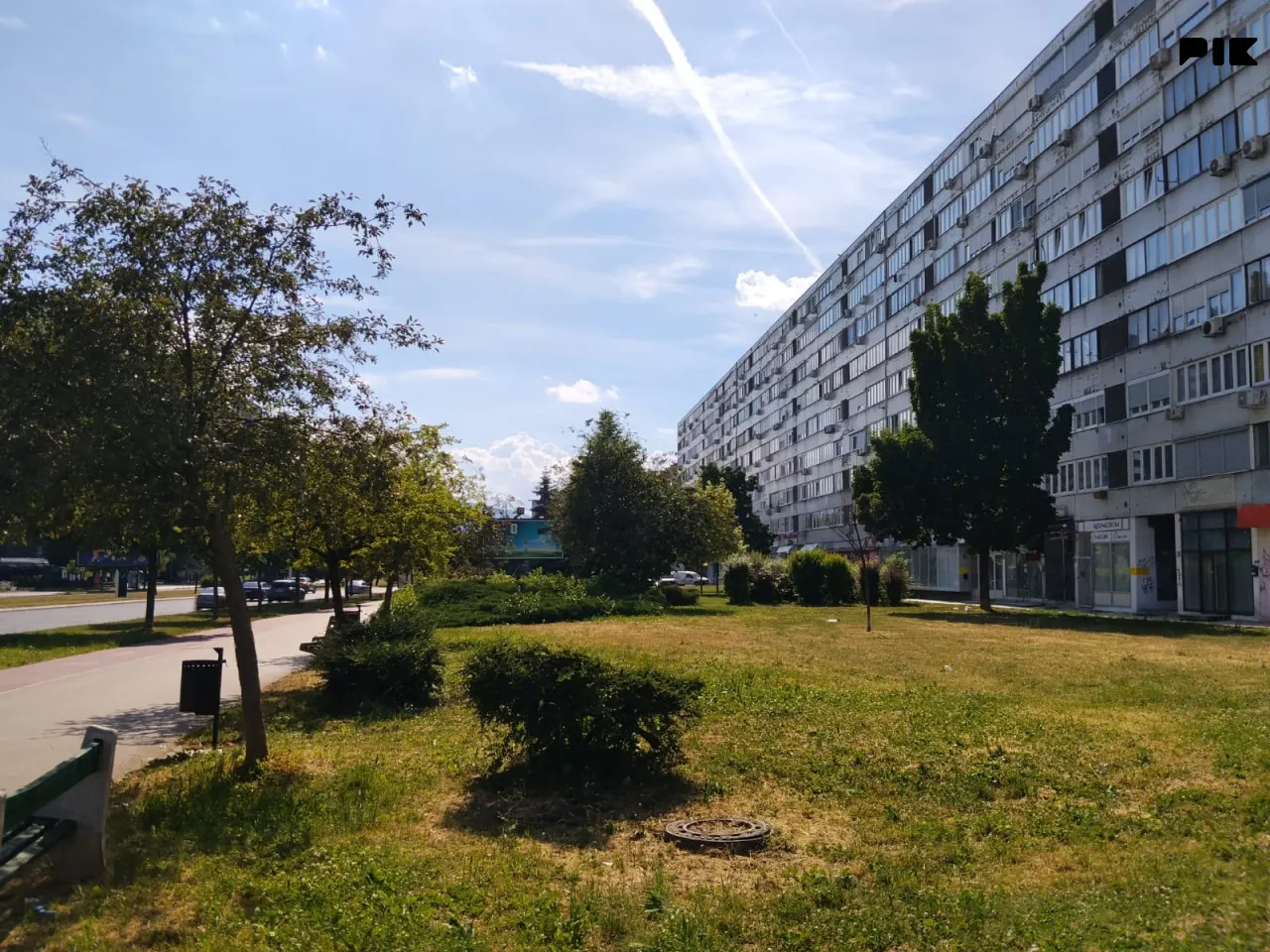
Sarajevo, Čengić Vila
Two-room flat, 54 m², 2nd floor, Čengić Vila - Stometarka
Sarajevo, Dobrinja C5, Novi Grad