Etažiranje in Bosnia: what it means when buying a flat
Etažiranje registers a flat as a separate unit in the land registry. Learn how to spot a flat that isn't registered, the risks, and what to do before paying.
Updated: 19 October 2026
Etažiranje is the registration of a flat in the land registry (zemljišna knjiga) as a separate unit of a building, tied to a specific co-ownership share. Only then does the land registry show exactly which flat you are buying. Without it, a buyer acquires only a fractional ("ideal") share of the whole property, so before you pay any deposit you should check the land registry extract and, if the flat is not registered as a separate unit, make the purchase conditional on etažiranje or protect yourself in the contract.
This is general information, not legal advice. A notary or lawyer confirms the details for your specific case.
What etažiranje means
In a building with several flats, the land and the building are legally one property. Etažiranje divides that property so that each flat or business unit is recorded as a self-contained unit. Each unit is linked to a matching co-ownership share, called an idealni dio (ideal share), of the whole property. In the Federation of BiH (FBiH) and Brčko District this is called etažno vlasništvo; in Republika Srpska (RS) it is etažna svojina. Both roughly mean "ownership of a separate part of a building", similar to a registered leasehold or condominium unit.
Only a self-contained usable unit can be registered this way: a flat, business premises or another separate room. Common parts of the building cannot belong to one owner. These include the foundations, main walls, attic, stairs, corridors, lift and utility installations. If it is unclear whether a part is common, the law treats it as common.
Where the rules differ
- FBiH: Law on Property Rights of FBiH (2013). Ownership of a unit is acquired by entry in the land registry. To register it, the court receives a declaration or contract of division (izjava or ugovor o diobi) and a plan of the separate parts (plan posebnih dijelova), which shows the size and label of each unit and where the common parts are.
- RS: Law on Property Rights of RS (2008). Etažna svojina arises from a co-ownership share and stays tied to it. It can also cover a balcony, terrace, cellar, attic space, garden and at most two parking places per unit. The share should match the flat's useful floor area relative to all units in the building.
- Brčko District: Law on Ownership and Other Real Rights of BD. The unit is created by a legal transaction or a court decision and acquired by entry in the land registry. The plan must show the land registry label of the plot, the street and house number, and a sketch of the unit and the common parts.
How to tell if a flat is not etažiran
Do not assume that a flat is already registered as a separate unit, whether it is in an older building or a new build. The only reliable evidence is the land registry, and specifically a recent extract, the ZK izvadak (land registry extract). Our guide to the land registry extract in Bosnia explains how to read one.
Signs the flat is registered as a unit
- The extract describes the flat as a separate part, with its own label, floor area and position in the building.
- The co-ownership share it is tied to is stated next to it.
- The seller is registered as the owner of that separate part.
Warning signs
- The seller is registered only as a co-owner of a fraction of the whole building or plot, with no description of a specific flat.
- The flat is mentioned only in an older contract, decision or certificate, not in the land registry.
- The floor area, floor or label in the extract does not match the flat you are viewing.
- The seller is not registered at all but says the registration "will be finished soon".
- In a new build, the developer is selling flats but the extract does not yet show any separate units.
In Brčko District the land registry is also available electronically, and you can request an extract from the court by giving the land registry folio number, cadastral municipality, parcel number or owner's name. In FBiH and RS, ask the competent land registry office or the cadastre how to get an extract most quickly.
Risks for the buyer
1. You cannot see which flat is yours
Without a registered separate unit, the buyer acquires only an ideal share of the whole property, and the land registry does not show which flat belongs to them. You may live in the flat, but your right to that particular flat cannot be proven by registration. This leaves room for disputes with other co-owners and makes a later sale harder.
2. New builds and the "provisional" owner
In FBiH, the landowner or developer can divide the building by a declaration of division even before construction is finished. A buyer of a flat under construction is then treated as a provisional owner (privremeni etažni vlasnik) until the flat is set up and registered as a separate unit. See our guide to buying a new-build flat in Bosnia for the checks on the developer.
3. Pre-emption right
In FBiH, co-owners of a single flat have a pre-emption right (pravo preče kupovine): a co-owner who sells their share must first offer it to the others. If you are buying a co-ownership share rather than a whole registered flat, ask the notary how that right is respected in your case.
4. Mortgage and bank loans
We have not found a reliable source on whether banks in BiH accept a flat that is not registered as a separate unit as loan collateral. If you are buying with a loan, ask the bank before you sign a pre-contract or pay a deposit.
5. The building's own paperwork
Etažiranje needs accurate records of the building and the plot. If the building or part of it has not been legalised, or the cadastre and land registry do not match, the process can become complicated or take longer. Check this before buying, not after. Our guide to legalisation of property in Bosnia covers the basics.
6. The owners' agreement
In FBiH, a contract between the unit owners on their mutual relations also binds later buyers. Ask whether such a contract exists and what it says, for example about maintenance and costs of the common parts. Each owner maintains their own flat at their own cost and pays the public charges for it.
What to do before you buy
- Get a recent land registry extract. An old extract does not show changes made since it was issued.
- Compare the extract with the flat. Check the label, floor and floor area, and where possible the cadastre data too.
- If the flat is not registered as a unit, ask why. Is the process under way? Is there a declaration or contract of division and a plan of the separate parts? Is the building legalised?
- The safest route is for the seller to complete etažiranje before the sale contract is signed. You then buy a registered flat, not an ideal share.
- If you still buy before registration, agree with the notary how the contract will protect you. Common approaches are an obligation on the seller to complete etažiranje by an agreed date, and paying part of the price only after registration. A notary or lawyer confirms which clauses are possible and effective in your case. Our guide to the pre-contract and deposit (kapara) explains the deposit stage.
- If you need a loan, ask the bank for written confirmation that it accepts the flat as it is registered.
FBiH also has a register for flats in buildings that have not been divided, the knjiga položenih ugovora (register of deposited contracts). Check with a notary how it protects a buyer and whether it applies to your flat.
How the procedure works
- FBiH: A declaration or contract of division and the plan of the separate parts are filed with the court's land registry office. Co-owners can agree on the division, or the landowner or developer can divide the building alone by declaration.
- RS: Any co-owner may demand at any time that etažna svojina be set up, if the legal conditions are met. The law provides for the RS Government to regulate when RS pays the registration costs; check with the competent office whether that regulation has been adopted and whether it applies to you. In RS, property records are kept by the Republic Authority for Geodetic and Property Affairs (RGURS), so ask there about the exact procedure.
- Brčko District: An application, a division plan (elaborat) certified by the Public Safety Department of the BD Government, and proof that the property tax (renta) has been paid are filed with the land registry office of the Basic Court.
We do not have reliable figures for the cost of the plan of separate parts, court fees or how long the procedure takes in FBiH and RS. Ask a surveyor (geodet) or licensed designer for a quote, and check fees with the court or a notary. For the wider purchase costs, see our guide to costs of buying property in Bosnia.
Example
A buyer living abroad finds a two-room flat in an older building in Sarajevo, which is in FBiH. In the land registry extract, the seller is registered as a co-owner of a certain ideal share of the whole building, with no description of the flat. The buyer does not pay a deposit but asks for an explanation. The seller says the plan of separate parts has been drawn up but not yet filed with the court.
At the notary, buyer and seller agree that the seller files the documents for registration and that the sale contract is signed only once the flat is registered as a separate unit. The buyer then pays for a registered flat, not an unidentified share of a building.
Common mistakes
- Relying on an old contract, an allocation decision or the seller's word instead of the land registry.
- Paying a deposit before seeing a recent land registry extract.
- Assuming a new-build flat is registered as a unit just because the building is finished.
- Not checking that the floor area and label in the extract match the actual flat.
- Taking a loan without the bank's confirmation that it accepts the flat as registered.
How DMI helps
We visit every flat we list in person and check its land registry entry, legalisation and photos before publishing it. For buyers abroad we offer video tours, so you can see the flat and what its land registry extract shows before you travel. Our current listings are in Sarajevo and you can browse them on all properties. If you want to know whether a particular flat is registered as a separate unit, ask us before the viewing. We will show you what the extract says; the final legal check for your case is done by a notary or lawyer.
Current listings
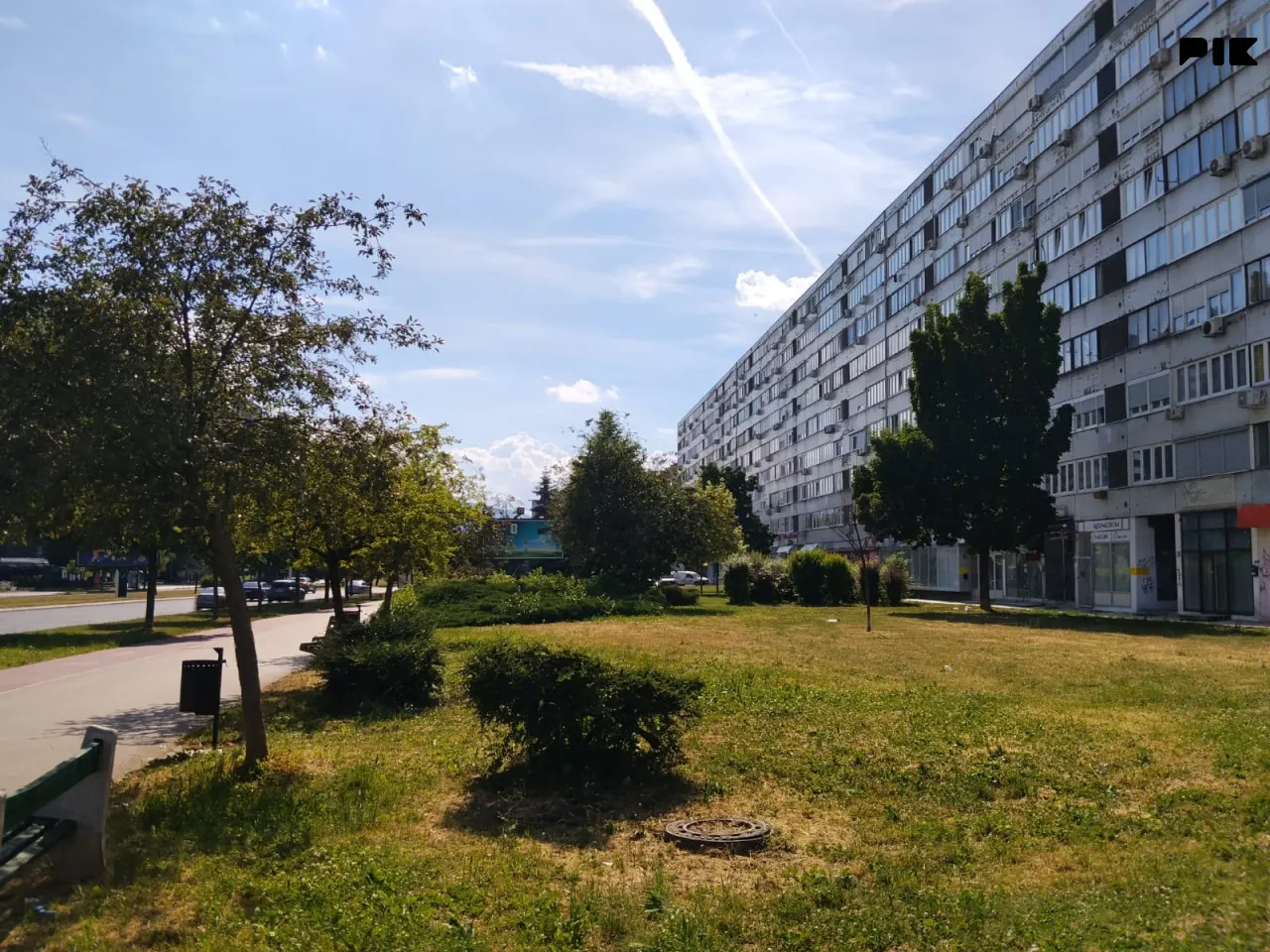
Sarajevo, Čengić Vila
Two-room flat, 54 m², 2nd floor, Čengić Vila - Stometarka
Sarajevo, Dobrinja C5, Novi Grad