ZK extract, posjedovni list and cadastre: the differences
A ZK extract proves who owns a Bosnian property and what charges it carries. A posjedovni list only shows the cadastral holder. Where to get each.
Updated: 19 October 2026
Ownership of a property in Bosnia and Herzegovina is proven by the ZK izvadak (land registry extract, often called gruntovnica). The posjedovni list (possession sheet) is an extract from the cadastre. It shows where a plot is, its size, its use and who is recorded as the holder, but it does not prove ownership. The katastar (cadastre) is not a document at all. It is the technical register of land and buildings and the office that keeps it.
In the Federation of BiH (FBiH), the ZK extract comes from the land registry office of the municipal court and the posjedovni list from the municipal cadastre service. In Brčko District, the ZK extract comes from the land registry office of the Basic Court. In Republika Srpska (RS), a single register is being introduced step by step, and requests for extracts are mostly handled by RGURS, the RS geodetic and property authority. Check where the extract is issued for your property's cadastral municipality.
This is general information, not legal advice. For a specific property, a notary or lawyer confirms the details.
The three terms in brief
- ZK izvadak: the legal document. It shows who owns the property and whether there are charges on it, such as a mortgage. People also call it gruntovnica, vlasnički list, vlastovnica or izvadak iz knjige položenih ugovora (extract from the book of deposited contracts, used mainly for flats).
- Posjedovni list: an extract from the cadastre. It shows the parcel number, area, kultura (land use, such as field, orchard or building plot) and the posjednik (holder).
- Katastar: the register of land and buildings, and the office that keeps it. When someone tells you to "check the cadastre", they usually mean a posjedovni list or a copy of the cadastral plan (the map).
ZK extract: what it proves
The FBiH Land Registry Act defines the land register (zemljišna knjiga) as a public book and public register of property rights in real estate. The official judiciary portal describes the ZK extract as a public document that proves ownership.
The extract has three sheets:
- Sheet A (popisni list): the description of the property, with its land registry parcel number.
- Sheet B (vlasnički list): who owns it, and in what share if there are co-owners.
- Sheet C (teretni list): encumbrances, such as mortgages and other registered rights of third parties.
For a buyer, sheet C matters as much as sheet B. A seller can be registered as the owner while the flat is still mortgaged to a bank.
For a closer look at reading each sheet, see our guide to the land registry extract in Bosnia.
The online view is not an official extract
The Sarajevo Municipal Court and the Basic Court of Brčko District both offer an online view of the land register. Both courts state clearly that it is for information only and does not have the force of a public document. Personal data is left out. The official extract is obtained at the land registry office.
Use the online view for a quick check before a viewing. For the notary and the contract, ask for an official extract.
Posjedovni list: what it shows and what it does not
The posjedovni list is an extract from the cadastre. It usually shows the possession sheet number, the parcel number (under the old and new survey), land use, area and the holder.
A holder is not the same as an owner. The cadastre records who holds and uses the property, not who legally owns it. So a posjedovni list is not proof of ownership, and it does not show mortgages.
It is still useful, especially for houses and land:
- it confirms where the plot is and its size according to the cadastre,
- it shows the land use,
- together with a copy of the cadastral plan, it helps you check boundaries and access.
In FBiH, public documents from the cadastre are issued by the municipal services responsible for geodetic work and the cadastre. The federal geodetic authority runs a central database and the katastar.ba software, but not every municipality has its data in digital form.
Katastar: a register, not one document
How the cadastre connects to the land register depends on where the property is.
FBiH: two separate registers
In FBiH there is the land register (kept by the court) and the cadastre (kept by the municipality). The land register takes the property's description from the cadastre, but in practice the two often do not match. That is why a buyer should compare both extracts.
RS: one unified register
The RS Survey and Cadastre Act creates a single register, the katastar nepokretnosti (real estate cadastre), which covers both the physical data and the legal rights. It is introduced cadastral municipality by cadastral municipality, through public display of the data and confirmation of rights. Where it is in place, the document you need is the list nepokretnosti (LN).
Where it is not yet in place, the older records still exist: the ZK extract, the posjedovni list and the KUU extract (from the book of deposited contracts). RGURS accepts requests for all of these. Whether a court still issues any extract for your cadastral municipality is something to confirm with RGURS or a notary.
Brčko District: two systems
The land register is kept at the Basic Court, and the cadastral records are kept by the relevant department of the Brčko District Government.
Where to get what
| FBiH | RS | Brčko District | |
|---|---|---|---|
| Proof of ownership | ZK extract, land registry office of the municipal court | LN where the real estate cadastre is in place, otherwise ZK or KUU extract; requests mostly go to RGURS, check where it is issued for your cadastral municipality | ZK extract, land registry office of the Basic Court |
| Cadastre document | Posjedovni list, municipal cadastre service | Posjedovni list (RGURS) where the old system still applies | Cadastre at a Government department |
| Online view | For information only, not a public document | Check with RGURS | For information only, not a public document |
How to check a property before you buy
- Ask the seller for the parcel number and the cadastral municipality (katastarska opština). Without these you cannot check anything accurately.
- Look at the online view (FBiH and Brčko) to get a first picture.
- Get an official ZK extract (or an LN in RS) as close as possible to the date you sign the contract.
- Check sheet B. Is the seller registered as the owner, and as the only owner? If there are co-owners, all of them need to take part in the sale.
- Check sheet C. Mortgages and other charges have to be dealt with before or during the purchase, with a clear agreement on who removes them and when.
- Get the posjedovni list and compare the parcel number, area and holder's name with the ZK extract.
- For houses and plots, add a copy of the cadastral plan and check boundaries and access on site. Our guide to buying a house with land covers the extra checks.
- Show any differences to a notary or lawyer before you pay a deposit (kapara).
An example
This example is invented for illustration only. It does not refer to any property in DMI's listings.
A buyer views a two-room flat in Sarajevo in the price range of around 300,000 KM. The seller shows a posjedovni list on which he is recorded as the holder and says everything is "clean".
The buyer asks for an official ZK extract and finds two things:
- sheet B shows the seller with a 1/2 share and his sister with the other 1/2,
- sheet C shows a bank mortgage.
The posjedovni list shows neither. Had the buyer paid a deposit on the strength of the posjedovni list alone, he risked buying half a flat with a mortgage on it. With the ZK extract, he knows the sister must take part in the sale and that removal of the mortgage must be agreed. A notary or lawyer then suggests how to do this, for example by paying part of the price directly to the bank.
Mistakes to avoid
- Treating the posjedovni list as proof of ownership. It does not prove ownership and does not show charges.
- Relying on a photo or screenshot of the online view. It is not a public document and does not replace an official extract.
- Using an old extract. The situation can change. Ask for a fresh extract before the contract.
- Skipping sheet C. A mortgage or other charge stays on the property after the change of owner unless it is dealt with.
- Ignoring differences between the land register and the cadastre. A different area or a different holder can point to unrecorded changes, unlegalised parts of the building or an unresolved inheritance. Legalisation (bringing unpermitted construction into the records) is a separate check.
- Assuming the rules are the same across BiH. FBiH, RS and Brčko District have different systems.
Costs and processing times
We have not found official fees or processing times that apply across BiH. In FBiH, court fees for a ZK extract depend on the canton, and fees for cadastral data are set by a decision on fees for the use of survey and cadastre data. In RS and Brčko District, the competent institutions set their own amounts. Before you go, ask the issuing office what it costs and how long it takes.
Buying from abroad
You usually do not need to collect the extracts in person. Someone holding your power of attorney, a lawyer or an agency can obtain them. Still, review the official extract yourself before you send any money. The full process is described in our guide to buying property in Bosnia from abroad.
How DMI helps
DMI currently has 8 properties listed, all in Sarajevo. We visit every property in person and check the land register, legalisation and photos before we publish it. For buyers abroad we offer video tours. If a flat in our listings interests you, we will show you what the ZK extract says and what still needs checking before the contract. The final legal check for your case is done by a notary or lawyer.
Current listings
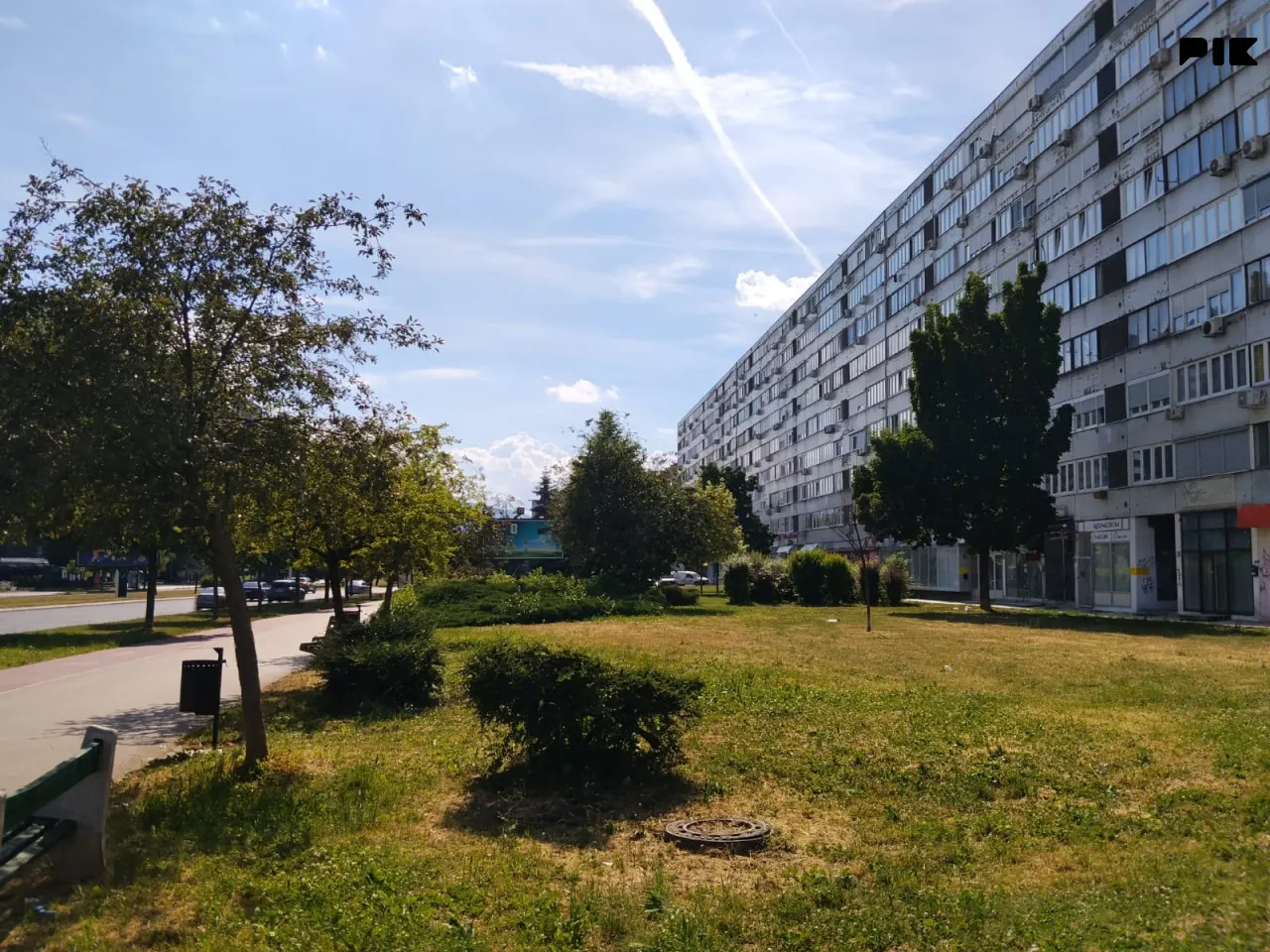
Sarajevo, Čengić Vila
Two-room flat, 54 m², 2nd floor, Čengić Vila - Stometarka
Sarajevo, Dobrinja C5, Novi Grad