Kapara vs advance payment in Bosnia: what if you back out
A kapara is earnest money that seals a contract; akontacija and predujam are advance payments. Here is what each means if a buyer or seller backs out.
Updated: 19 October 2026
In this guide
- The three terms in brief
- Kapara: what the law says
- Akontacija, predujam and avans
- Odustanica, and a kapara with a right to withdraw
- What happens when someone backs out without a right to do so
- Why the form of the contract matters
- Where these rules apply
- What your contract should state clearly
- Common mistakes
- An example
- How DMI helps
A kapara (earnest money) is money one party gives the other when a contract is concluded, as a sign that the deal is done. Akontacija, predujam and avans are different everyday words for the same thing, which is part of the price paid in advance. The difference shows only when someone backs out. Under Bosnian law a kapara can be lost, or double its amount can be claimed back, while an advance is normally counted towards the price or returned, with no automatic penalty.
This is general information, not legal advice. A notary or lawyer should confirm the wording of your contract and its consequences for your specific case.
The three terms in brief
- Kapara (earnest money): handed over when the contract is concluded, as a sign that it is concluded. It is governed by the Law on Obligations, the Zakon o obligacionim odnosima (ZOO), Articles 79 to 81.
- Akontacija, predujam, avans (advance payment): part of the price paid early. The ZOO does not treat them as separate legal terms, and they do not secure the deal.
- Odustanica (agreed exit payment): an amount agreed in advance that buys a party the right to withdraw from the contract (ZOO Art. 82). A kapara works as an exit payment only if the contract expressly says so (Art. 83).
The word used in the contract matters. In legal writing and court practice in the region (Serbia, Croatia), a payment not clearly agreed as a kapara is usually treated as an advance. We have not found Bosnian court decisions on this point, so the safest approach is a contract that names the payment clearly.
Kapara: what the law says
Under Article 79 of the ZOO:
- A kapara can be money or other interchangeable things. It is given when the contract is concluded, and unless agreed otherwise, the contract counts as concluded once the kapara is handed over.
- When the contract is performed, the kapara is returned or counted towards the payment. In a flat purchase it is almost always counted towards the price.
- Unless agreed otherwise, the party who gave the kapara cannot back out simply by leaving it behind, and the party who received it cannot back out simply by paying back double.
This is the most important point on this page: a plain kapara does not buy you a right to back out. Many buyers believe they can always walk away by sacrificing the deposit. By law that is not the case unless the contract provides for it.
If the contract is only partly performed, the party who received the kapara cannot keep it (Art. 81). It can claim the rest of the performance plus damages for the delay, or damages for incomplete performance. Either way, the kapara is counted towards those damages.
Akontacija, predujam and avans
These are different words for one thing: part of the price paid before the final payment. Akontacija and avans are more common in Bosnia, predujam is more common in Croatia.
According to legal writing in the region, an advance does not secure the deal the way a kapara does:
- if the payer backs out, the advance is counted towards their obligation or towards damages the other side proves;
- there is no automatic forfeit of the whole amount and no repayment of double;
- if the contract falls through, the advance is normally returned.
Exactly how much is returned, and with what interest, depends on the case and on the rules on terminating a contract. A lawyer confirms this.
Odustanica, and a kapara with a right to withdraw
If you want one or both parties to be able to back out at a known price, the contract must say so expressly. Article 82 of the ZOO sets out how an odustanica works:
- the parties may agree that one or both of them can withdraw by paying an odustanica;
- once a party declares it will pay, it can no longer demand that the contract be performed;
- the payment must be made at the same time as the withdrawal is declared;
- if no deadline was set, a party can withdraw until the deadline for its own performance runs out;
- the right ends once that party starts performing.
If a right to withdraw is agreed together with a kapara, the kapara counts as an odustanica and either party may withdraw (Art. 83). A buyer who gave the kapara and withdraws loses it. A seller who received it and withdraws pays back double.
The timing differs: a kapara is handed over when the contract is concluded, while an odustanica is paid only if someone uses the right to withdraw.
What happens when someone backs out without a right to do so
This is governed by Article 80 of the ZOO. Based on the usual reading of that article, which a lawyer should confirm for your case:
- The buyer who paid the kapara backs out: the seller chooses between keeping the kapara, or demanding performance (if still possible) plus damages, with the kapara counted towards them.
- The seller who received the kapara backs out: the buyer chooses between claiming double the kapara, or demanding performance (if possible) plus damages and the return of the kapara.
In Serbian case law, a party who accepts double the kapara cannot also claim damages. That case law is not binding in Bosnia, but it shows how the question is usually resolved.
There may also be a possibility for a court, at the request of the party concerned, to reduce a kapara that is out of proportion. Whether and how far this applies is for a lawyer to assess.
No fault, no penalty. These rules apply when one party is responsible for the failure. If the deal falls through for a reason that is neither party's fault, a lawyer should assess the consequences.
Why the form of the contract matters
A kapara is only as good as the contract it comes with. According to court practice in the region, if the main contract is void, the kapara agreement is void too, and the rights attached to the kapara are lost with it.
Our understanding is that transferring ownership of property in Bosnia requires a notarised contract (notarska obrada, a contract drawn up by a notary), and that a pre-contract (predugovor) should follow the form of the main contract. Always confirm this with a notary before you pay anything. A kapara paid against a paper signed only by buyer and seller may leave you without the protection you are counting on.
For more on the pre-contract and how large a kapara usually is, see Pre-contract and deposit (kapara) when buying in Bosnia.
Where these rules apply
- Federation of BiH (FBiH): the ZOO applies as an inherited law, with later amendments that do not touch the kapara articles.
- Republika Srpska (RS): the ZOO applies in the version published in the RS Official Gazette. As far as we could check, Articles 79 to 83 are the same as in FBiH.
- Brčko District: the same ZOO probably applies, but confirm this with a notary or lawyer for your case.
The rules on contract form and notaries come from separate notary laws in each part of the country, so they may differ.
What your contract should state clearly
Before you pay, check that the contract covers these points:
- Whether the amount is a kapara or an avans. Use the word itself, not a description such as "paid in advance".
- Whether either party has a right to withdraw, and at what price. If neither does, say that too.
- The deadline for signing the main contract or paying the rest of the price.
- What happens if the buyer does not get a mortgage, or if burdens are found on the property. These conditions should be agreed in advance.
- How the money was paid. A bank transfer leaves a trail, cash is harder to prove. See How to pay for property in Bosnia safely.
- That the kapara is counted towards the price at final payment.
Common mistakes
- Believing a kapara always lets you walk away. Under Article 79, a plain kapara gives no such right.
- An unclear label on the payment. In legal writing and court practice in the region, an unclear payment is usually treated as an advance, so a seller may lack the protection they expected. We have not found Bosnian court decisions on this.
- Paying a kapara before checking the property. Check ownership and burdens first, then pay. See Land registry extract in Bosnia: checking ownership before you buy.
- A kapara under a contract of doubtful form. If the contract is not valid, the kapara agreement will not help you.
- Cash without a receipt. Without proof of payment it is hard to claim the money back or claim double.
- Ignoring tax. We have not checked whether a kept or doubled kapara has tax consequences. Ask a tax adviser or the tax office.
An example
Two-room flats in Sarajevo on DMI's books are advertised at 275,000 to 359,000 KM (convertible marks). Take a flat at 300,000 KM and a kapara of 15,000 KM. The kapara amount is for illustration only, not a recommendation.
Option A: plain kapara, no right to withdraw. Based on the usual reading of Article 80, which a lawyer should confirm: if the buyer fails to sign the main contract without justification, the seller may keep the 15,000 KM or demand performance plus damages. If the seller backs out, the buyer may claim 30,000 KM (double) or demand performance plus damages and the return of the kapara.
Option B: kapara with an agreed right to withdraw. The buyer may withdraw and loses 15,000 KM. The seller may withdraw and pays back 30,000 KM. Neither side can force the other to complete.
Option C: the same 15,000 KM paid as an advance. According to legal writing in the region, if the buyer backs out the seller does not automatically keep the whole sum. It may keep up to the damage it proves, and the rest is returned. We have not found Bosnian court practice on this.
Same amount, three different outcomes. The word in the contract is worth more than the figure.
How DMI helps
Every DMI listing is visited in person, and its land registry entry, legalisation status and photos are checked before it is published, so you are not paying a kapara on a property with an unknown owner or hidden burden. Buyers abroad can ask for a video tour. Before any money changes hands, we help you be clear about whether you are paying a kapara or an advance and what that means if the deal fails, while a notary or lawyer confirms the final contract text. Browse all our properties.
Current listings
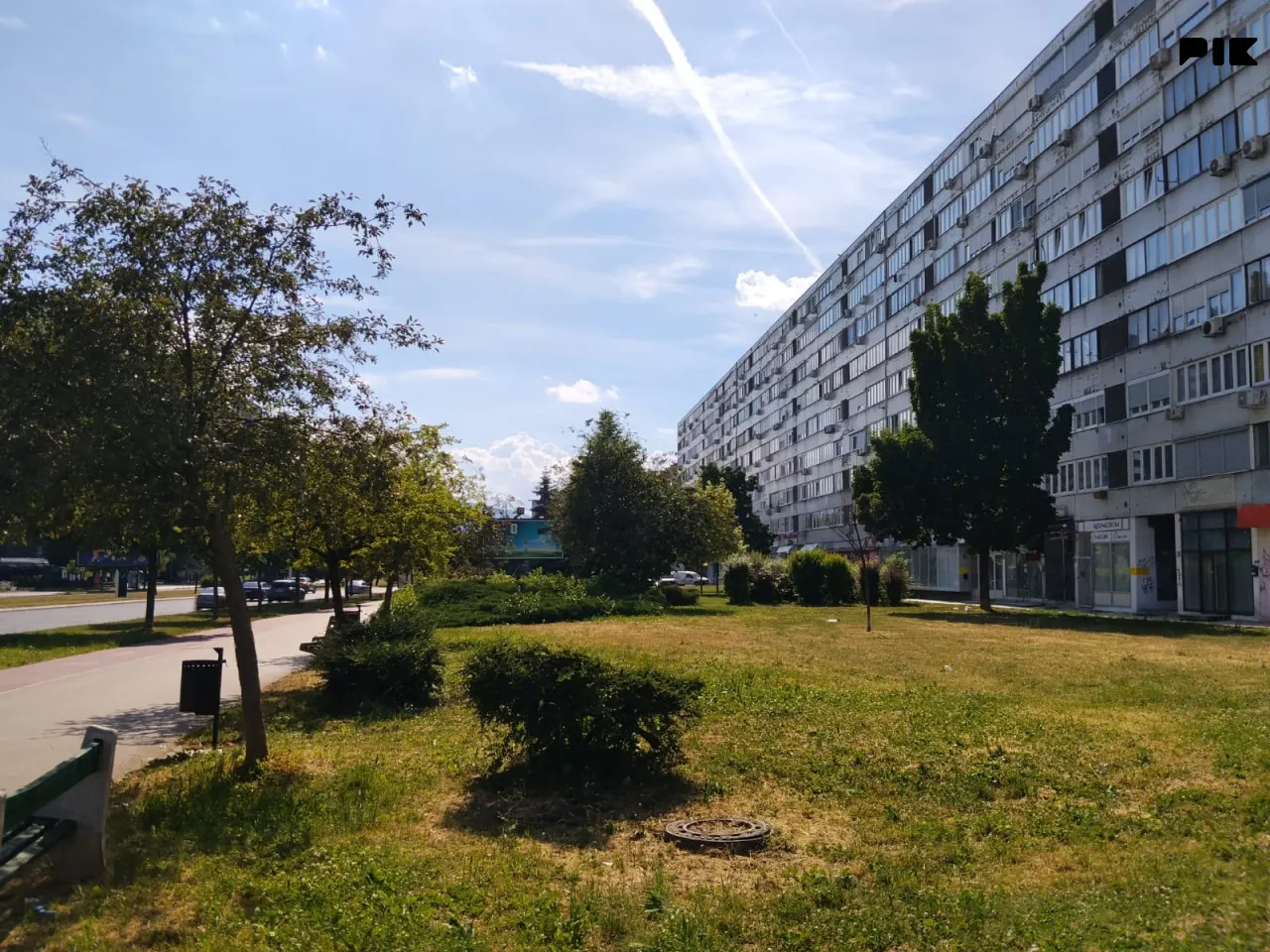
Sarajevo, Čengić Vila
Two-room flat, 54 m², 2nd floor, Čengić Vila - Stometarka
Sarajevo, Dobrinja C5, Novi Grad