Buying a house with land in Bosnia: the extra checks
A house with land in Bosnia means checking boundaries, cadastre and land register, road access, utilities and outbuildings before you sign a pre-contract.
Updated: 16 October 2026
With a house and plot you are buying land as well as a building: its boundaries, its access to a public road and everything built on it. Before you sign a pre-contract, compare the cadastre with the land register, confirm the plot has a legally secured route to a public road, check the utility connections and outbuildings, and if needed hire a surveyor to mark the boundaries on the ground. The offices responsible differ between the Federation (FBiH), Republika Srpska (RS) and Brčko District, so first establish where the property is.
This is general information, not legal advice. A notary or lawyer confirms the details for your specific case.
Cadastre and land register: two records that must match
Bosnia keeps two separate records for land:
- The katastar (cadastre) holds the technical data: parcel number, area, land use and the cadastral plan (the official map).
- The zemljišna knjiga, or ZK (land register), holds the rights: who owns the land, and whether there is a mortgage, an easement or a zabilježba (an annotation, for example of a pending dispute).
What matters to you is that both records say the same thing and match what is actually on the ground.
FBiH
- The ZK extract (ZK izvadak) is issued by the land register office of the municipal court. The fee is set by each canton's court-fee law, so it varies: court websites show amounts of roughly 5 to 10 KM (convertible marks), and Canton Sarajevo set it at 10 KM in a recent amendment. Check the exact amount with the court. Some courts issue the extract the same day if there is no pending entry.
- You can check the cadastre on katastar.ba, searching by parcel number or by posjedovni list (possession sheet) number within a cadastral municipality. This data is for information only and is not an official document. Official documents come from the municipal geodetic and cadastre office. Some municipalities are not yet digitised or are still being updated.
- To register ownership in the ZK in FBiH you need a registration sheet (prijavni list) and a copy of the cadastral plan, so a cadastre that does not match can slow down registering your ownership.
- A reform is under way: the FBiH Government has sent parliament a draft law on survey and property cadastre that aims to merge cadastre and ZK data into one system. Ask the relevant office whether it has been adopted.
RS
- The records are kept by RGURS, the RS geodetic and property authority, through its regional offices. These include the property cadastre, the land cadastre, the ZK and others.
- The online eKatastar is for information only and is not an official document.
- Only the registered owner can get a list nepokretnosti (property sheet) searched by name. Anyone else can request it by cadastral municipality, sheet number and parcel number.
- Ask the regional RGURS office what the extract costs.
Brčko District
- The ZK is kept by the Basic Court of Brčko District. Its e-ZK portal is for information only; an official extract comes only from the court's land register office. According to the court, the fee is 10 KM. You need the ZK folio number (uložak), cadastral municipality, parcel number or the owner's details.
- The ZK is public, and nobody can claim they did not know what it says.
- The cadastre is run by the Public Register Department (Odjeljenje za javni registar). It issues copies of the cadastral plan, aligns the ZK and cadastre on request, carries out setting out (iskolčavanje, marking points on the ground) and runs the public display of property data (izlaganje).
What exactly to compare
- Are the parcel number and cadastral municipality the same in the cadastre and the ZK?
- Does the plot area match?
- Is the seller registered as owner in the ZK, not just as possessor in the cadastre?
- Does the ZK show a mortgage, easement or annotation (for example of a dispute)?
- Are the house and outbuildings drawn on the cadastral plan and registered?
For more on the extract itself, see Land registry extract in Bosnia: checking ownership before you buy.
Parcel boundaries
The cadastral plan is the starting point: a surveyor uses it to transfer the boundaries to the ground and shows you where they fall in relation to the fence, wall or hedge. But the plan is not always the final word if a dispute with a neighbour arises.
FBiH: boundary settlement (uređenje međa) is a non-contentious court procedure. According to a legal commentary on the FBiH Property Rights Act, the court sets the boundary in this order: by the neighbours' agreement, then by the last peaceful possession, then by fairness. If the disputed strip is worth more than the small-claims threshold and the neighbours do not agree, the court stops the procedure and refers the matter to a full lawsuit.
This is why a long-standing fence can carry legal weight even when it does not follow the plan exactly. For you as a buyer: if the fence and the plan differ, do not assume that whichever version favours you will apply automatically.
Brčko District: the Basic Court settles boundaries when boundary markers have been destroyed, damaged or moved, and also refers higher-value disputes to a lawsuit.
RS: confirm the boundary rules with a lawyer or the regional RGURS office.
In practice, ask the seller and the neighbours whether there have been disagreements about the boundary, and check the ZK for an annotation of a dispute.
Access to a public road
A plot without legally secured access can become a problem for you, and for your own buyer when you come to sell.
FBiH: a služnost (easement, for example a right to cross a neighbour's plot) can be created by contract, by a decision of a court or other authority, or by law. An easement on land comes into being when it is entered in the ZK as a burden on the plot that is crossed. So you need to check the ZK of the neighbouring plot too, not only the one you are buying. A verbal arrangement with a neighbour is not the same as a registered easement.
If there is no access, the owner can ask a court for a nužni prolaz (forced right of way) under Article 205 of the FBiH Property Rights Act. The court grants it if:
- there is no road link, or no suitable road link, to a public road;
- the benefit to the landlocked plot outweighs the harm to the neighbouring plot;
- the owner who benefits pays compensation.
Compensation is full, and the court can make the right of way conditional on payment. This is a cost and a procedure to factor in before you buy, not after.
RS and Brčko District: confirm the rules on easements and forced right of way with a notary or lawyer.
Utility connections: general guidance
We do not give deadlines or exact documents for electricity, water and sewage connections, because the procedure differs by area and by supplier. Confirm these steps with the relevant authority:
- Ask the seller for bills and supply contracts, to see whether the connections are official and in whose name.
- For electricity, contact the local distributor (Elektroprivreda BiH, EP HZHB or ERS, depending on the area); for water and sewage, the municipal utility company.
- Check whether the lines cross a neighbour's plot. In FBiH a court decision can create an easement for utility lines (služnost vodova), which exists once the decision is final and can be entered in the ZK. If lines cross someone else's land without a registered right, ask a notary how to resolve it.
- If there is no connection, ask the supplier before you buy whether connecting is possible and what it requires.
Outbuildings and legalisation: general guidance
Garages, sheds, summer kitchens and extensions are often built later than the house. In FBiH the legalisation rules are set by each canton and differ from one to another, while RS and Brčko District have their own rules. So we give only the general order here; the municipal planning office confirms the conditions and deadlines:
- For every building on the plot, check whether it is drawn in the cadastre and registered in the ZK.
- Ask the seller for the building permit and the upotrebna dozvola (occupancy permit), or a legalisation decision, especially for outbuildings.
- If there are no documents, ask the municipality whether legalisation is possible and what it costs before you agree a price.
More detail in Legalisation of property in Bosnia: what buyers need to know.
The surveyor (geodeta)
A geodeta (surveyor) records the existing situation, compares it with the cadastral plan and marks the boundaries on the ground. With a house and plot, this is often the only way to find out whether the fence, the house and the outbuildings actually stand on the plot you are buying.
- In RS, a request for geodetic works is made on an RGURS form.
- In Brčko District, setting out is done by the Public Register Department.
- In FBiH, ask the municipal geodetic and cadastre office.
Check who is allowed to carry out survey work, and the likely cost, with the relevant geodetic authority or office. Get the surveyor's quote in writing. Ideally the survey is finished before the pre-contract, or the pre-contract is made conditional on its result.
The order of checks
- Get the parcel number and cadastral municipality from the seller.
- Check the data online for information (katastar.ba, eKatastar or e-ZK).
- Request an official ZK extract and a copy of the cadastral plan.
- Compare the owner, area, burdens and registered buildings.
- Check the access, and the ZK of any neighbouring plot you cross.
- Check the utility connections and outbuildings.
- Hire a surveyor if the boundaries are unclear.
- Only then sign the predugovor (pre-contract), with conditions that protect you. See Pre-contract and deposit (kapara) when buying in Bosnia.
Common mistakes
- Relying only on the fence, without a survey.
- Using the online cadastre instead of an official extract.
- Checking only your own plot, not the ZK of the neighbouring plot you cross.
- Accepting a verbal arrangement for access instead of a registered easement.
- Assuming outbuildings are legal just because the house is.
- Paying a kapara (deposit) before the checks are finished.
An example
A buyer in FBiH is looking at a house with a garden. The ZK shows the seller as owner, but the plot area in the cadastre is smaller than in the ZK, and the garage is not on the plan. The house is reached by a track over the neighbour's plot, and the neighbour's ZK shows no registered easement.
The buyer does not pay a deposit straight away. A surveyor shows that the garage partly crosses the boundary. The buyer asks the seller, before the sale, to align the cadastre and ZK, sign an easement contract with the neighbour and register it, and start legalising the garage. The pre-contract lists these as conditions for the final contract. The buyer now knows exactly what they are buying.
How DMI helps
Every property we list is visited in person, and its land registry, legalisation and photos are checked before it is published. For buyers abroad we offer video tours. Our current listings are flats in Sarajevo rather than houses with land, so for a house you are considering elsewhere we can help you put together a list of questions for the seller, the notary and the surveyor, and the order of checks before you sign a pre-contract.
Current listings
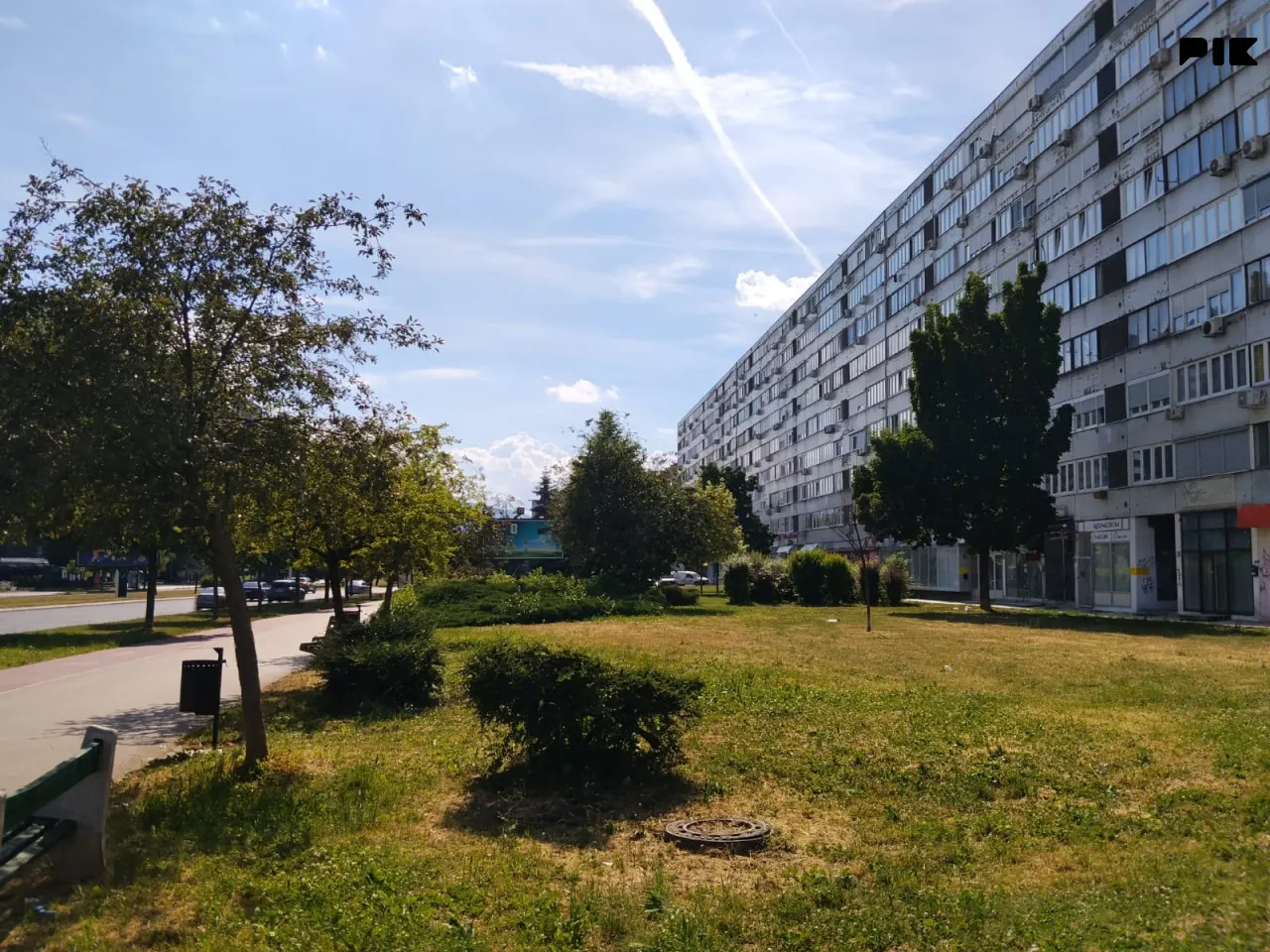
Sarajevo, Čengić Vila
Two-room flat, 54 m², 2nd floor, Čengić Vila - Stometarka
Sarajevo, Dobrinja C5, Novi Grad