Pre-contract and deposit (kapara) when buying in Bosnia
A predugovor binds buyer and seller to sign the sale contract later. The law sets no deposit amount. Learn what happens if one side backs out.
Updated: 16 October 2026 · Editor: Arslan Dučić
A predugovor (pre-contract) is an agreement in which buyer and seller commit to signing the main sale contract at a later date. A kapara (deposit) is money handed over when a contract is concluded, as a sign that the deal is done. The law does not set how much it should be, so the amount is agreed between the parties. If one side backs out, what happens depends on who is at fault and on exactly what the contract says. That is why the two things that matter most are signing the pre-contract in the correct legal form and stating clearly what the money you pay actually is.
This is general information, not legal advice. For your own purchase, a notary or lawyer should confirm the details.
Which law applies
Pre-contracts and deposits are governed by the Zakon o obligacionim odnosima (ZOO, Law on Obligations). Bosnia and Herzegovina has two entities, the Federation of BiH (FBiH) and Republika Srpska (RS), plus Brčko District. FBiH and RS both apply the former Yugoslav law, each with its own amendments. The articles on the pre-contract (Article 45) and the deposit (Articles 79-81) read the same in both entities.
For Brčko District, we could not confirm which law on obligations applies. If you are buying in Brčko, ask the notary before you sign anything.
What a pre-contract is
Under Article 45 of the ZOO:
- a pre-contract obliges the parties to sign a main contract later;
- if the law requires a particular form for the main contract to be valid, the same form applies to the pre-contract;
- it is binding only if it contains the essential terms of the main contract: the exact property, the price and the parties;
- if one party refuses to sign the main contract, the other can sue, and the court will order it to sign within a deadline the court sets;
- you can demand the main contract within 6 months of the date on which, under the pre-contract, it should have been signed. If no date was agreed, the 6 months run from when it should have been signed given the nature of the deal and the circumstances;
- a pre-contract stops being binding if circumstances have changed so much that the parties would not have signed it under them.
In practice: if you leave the signing date out, it becomes hard to prove when the 6 months started. Miss that window and you lose the right to have a court force the main contract.
What form the pre-contract must take
This is where the rules differ between the entities.
FBiH
Following Constitutional Court decision U-22/16, Article 73 of the FBiH Law on Notaries no longer applies, so a notarska obrada (a deed drafted by the notary) is no longer mandatory for property transfer contracts. A lawyer may draft the contract.
In legal position no. 70 0 Dn 009610 22 Spp of 08.12.2022, the FBiH Supreme Court held that signatures on a property transfer contract must be certified by a notary or a court for the contract to be accepted for entry in the land registry. The notary then certifies the signatures but is not responsible for the content.
Because of Article 45(2), it is sensible to make a pre-contract in FBiH in writing with signatures certified by a notary or court. It is not clear whether courts treat certification as a condition of validity or only as a condition for registration. The safer choice is to certify.
Republika Srpska
Under Article 57 of the RS Law on Notarial Service (Sl. glasnik RS 28/21), a notary deed is mandatory for transactions transferring property rights in real estate. A transaction made without it is void. Since the pre-contract follows the form of the main contract, a pre-contract in RS should be made before a notary.
Brčko District
The Brčko Law on Notaries keeps a list of transactions that require a notary deed. Until that is confirmed, make the pre-contract before a notary.
Why form matters for your deposit too
If the pre-contract is void because of the wrong form, the money you paid is not a deposit in the legal sense. It is returned only in the single amount, as unjust enrichment. You have no right to double, and the seller has no basis to keep it.
How much deposit to pay
The ZOO sets no minimum, no maximum and no percentage. The amount is agreed. A figure of 10% of the price is often mentioned, but we could not confirm it from any reliable source.
Under the ZOO (Article 80(4), the same in FBiH and RS), a court can reduce an excessively large deposit if a party asks it to.
When agreeing the amount, consider:
- how much you could afford to lose if the deal fails through your fault;
- how long until the main contract (for example, waiting for a mortgage or the sale of your own property);
- that sellers rarely want to take a property off the market for a small sum, while buyers do not want to risk a large one.
When the contract is performed, the deposit is returned or counted toward the price (Article 79(2)). It is usually counted toward the price.
Deposit, deposit with a right to withdraw, and advance
Write down exactly what the money is, because the consequences differ:
- Kapara (deposit, Article 79): a sign the contract is concluded. Unless agreed otherwise, it is not a price for walking away. The buyer cannot withdraw simply by leaving the deposit behind, and the seller cannot withdraw simply by paying back double (Article 79(3)).
- Deposit with an agreed right to withdraw: if a right to withdraw is agreed together with the deposit, either side may withdraw. If the payer withdraws, they lose the deposit; if the receiver withdraws, they pay back double.
- Avans (advance payment): part of the price paid upfront. If the receiver does not perform, only the same amount is returned.
What happens if one side backs out
If the seller (who received the deposit) backs out
The buyer can choose (Article 80(2)) to:
- demand performance of the contract, if still possible;
- claim damages plus return of the deposit;
- demand double the deposit.
Whenever performance is demanded, damages for delay can also be claimed (Article 80(3)).
If the buyer (who paid the deposit) backs out
The ZOO covers this in Article 80(1). The text available to us was incomplete, so we cannot say reliably what options the seller has: whether it can keep the deposit, demand performance or claim damages. If you find yourself in this position, speak to a notary or lawyer before doing anything.
Partial performance
If the contract has been partly performed (for example, part of the price paid), the receiver cannot keep the deposit. It can demand the rest plus damages for delay, or damages for the unperformed part, with the deposit counted toward the damages (Article 81).
Odustanica (agreed withdrawal fee)
If the contract provides for an odustanica, a sum for which a party may withdraw:
- it is paid at the same time as the notice of withdrawal;
- once a party says it will pay it, it can no longer demand performance;
- if no deadline was set, withdrawal is possible until the date that party must perform;
- the right ends once the party starts performing or accepting performance.
How to protect yourself: step by step
- Check ownership before paying anything. Get a fresh ZK izvadak (land registry extract) and check the owner, encumbrances and notes. See our guide Land registry extract in Bosnia.
- Use the correct form. In RS and Brčko, before a notary; in FBiH, at minimum in writing with signatures certified by a notary or court.
- Include all essential terms: the parties, the property as described in the extract (plot number, land registry folio, flat with area and floor), the total price and payment method.
- State the exact date for signing the main contract. The 6-month window runs from it.
- Name the money clearly: deposit, deposit with right to withdraw, or advance. Avoid vague wording.
- Pay by bank transfer, with the purpose and contract reference in the payment description.
- Agree what happens if your mortgage is refused or an encumbrance appears, and how the money is then returned.
- Include the seller's consent to register you as owner in the main contract (the clausula intabulandi). In RS, the notary files the land registry application for you right after the transfer contract is signed.
- Ask the notary whether the pre-contract can be noted in the land registry.
What the pre-contract costs
Notary fees depend on where you buy. In RS, a pre-contract is charged at 50% of the base fee for contracts, with minimum and maximum limits in points. FBiH uses the notary tariff published in Sl. novine FBiH 38/21, and Brčko a temporary tariff. Ask the notary for the exact fee in advance. For the full picture, see Costs of buying property in Bosnia.
Common mistakes
- Paying a deposit against a handwritten receipt without certification, which later turns out to be void.
- A pre-contract with no date for the main contract.
- Calling money a "kapara" when both sides meant an advance, or the reverse.
- Paying before checking the land registry extract and legalisation status.
- Believing a buyer can always "just leave the deposit and walk away". Without an agreed right to withdraw, that is not the case.
- Missing the 6-month deadline to go to court.
Example
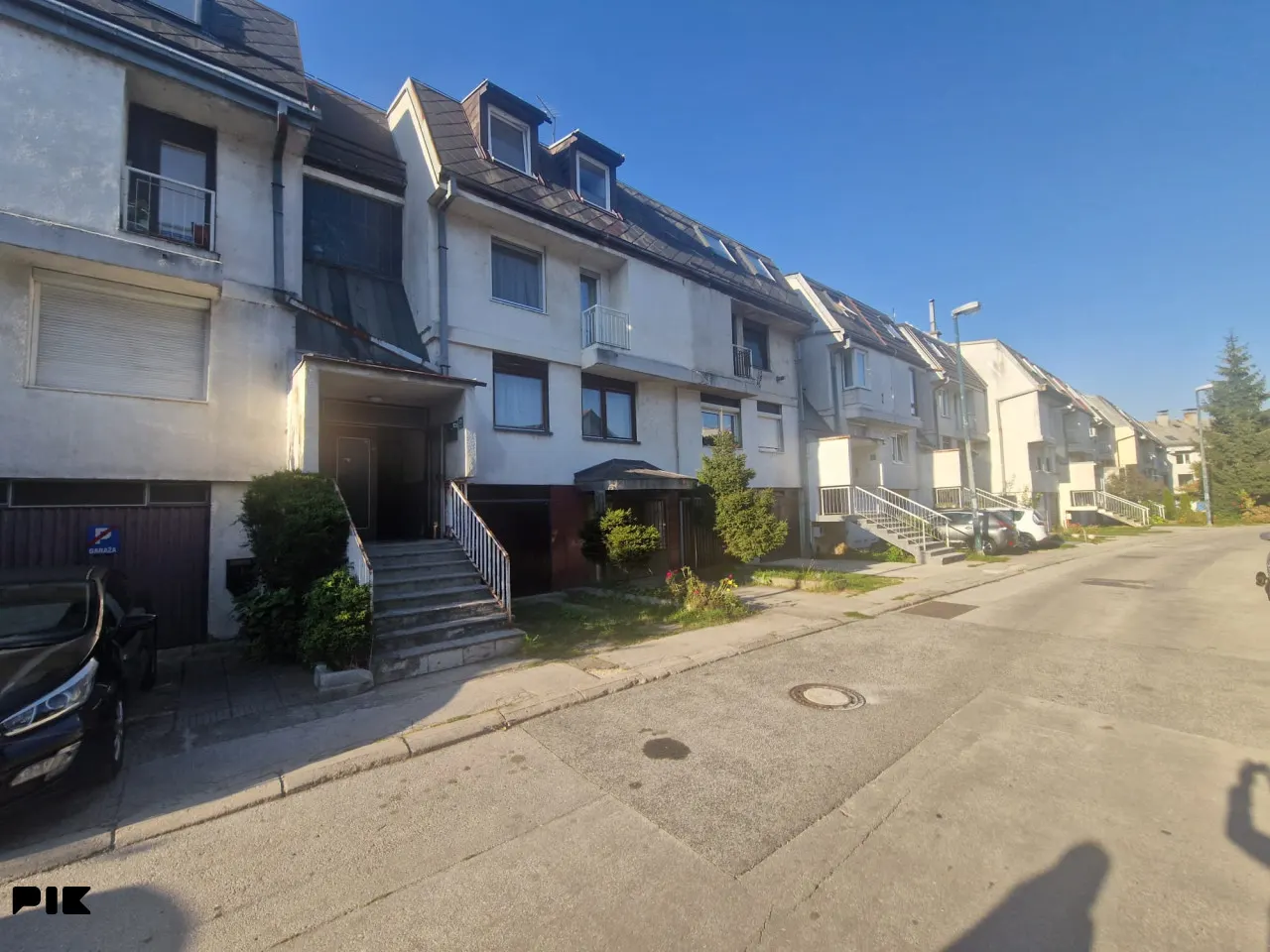
A buyer wants a three-room flat of 75 m² in Dobrinja for 275,000 KM (convertible marks), like this flat at Dobrinja C5. The flat is in FBiH. Buyer and seller agree a deposit of 20,000 KM (an illustration only, not a recommendation) and signing of the main contract within 60 days, once the mortgage is approved.
They put the pre-contract in writing, describe the flat as in the land registry extract, state the price, the signing date and that the money is a deposit counted toward the price. Signatures are certified by a notary and the deposit is paid into the seller's account.
- If the seller gets a better offer and refuses to sign, the buyer can ask a court to order the main contract (within 6 months of the agreed date), or claim 40,000 KM (double the deposit), or the return of 20,000 KM plus damages.
- If the buyer's mortgage is refused, the outcome depends on what the contract says. Without such a clause, the consequences for the buyer follow Article 80(1) of the ZOO.
- Had the signatures not been certified and the pre-contract turned out void, the buyer would get back only the 20,000 KM.
How DMI helps
We visit every property we list in person and check its land registry status, legalisation and photos before publishing it. Buyers abroad can ask for a video tour. With pre-contracts and deposits our role is organisational: we arrange notary appointments, obtain the property documents and make sure both sides know in good time what is to be signed. The content of the contract and its legal effects are confirmed by the notary or a lawyer. If you are buying from abroad, read Buying property in Bosnia from abroad.
Current listings
Sarajevo, Čengić Vila
Two-room flat, 54 m², 2nd floor, Čengić Vila - Stometarka
Sarajevo, Dobrinja C5, Novi Grad