How to pay for property in Bosnia safely
Pay through a bank or a notary's deposit account, never in cash above 30,000 KM, and agree the order of signing, payment and keys in the contract.
Updated: 16 October 2026
In this guide
The safest way to pay for property in Bosnia and Herzegovina is by bank transfer, either to the seller's account or to a notary's deposit account, under a contract that states exactly when and on what condition the money becomes the seller's. If the price is 30,000 KM or more, the state anti-money-laundering law requires payment by bank order, so cash is not allowed. No law sets the order of signing, paying and handing over the keys. Your contract does, so agree it before anyone signs.
This page is general information, not legal advice. A notary or lawyer will confirm the details for your specific case.
What the law says about paying for property
The relevant law is the Zakon o sprječavanju pranja novca i finansiranja terorističkih aktivnosti BiH (the Law on the Prevention of Money Laundering and Terrorist Financing), published in Službeni glasnik BiH 13/24, the state Official Gazette. It is a state-level law, so it applies equally in the Federation of BiH (FBiH), Republika Srpska (RS) and Brčko District. Four points matter to buyers and sellers:
- Bank payment is required. If a property sale contract involves one or more payments worth 30,000 KM or more (or the equivalent in foreign currency), every payment must be made by bank payment order, unless another law provides otherwise.
- Treat exactly 30,000 KM as covered. Different parts of the law describe the threshold as "more than 30,000 KM" and "30,000 KM or more". The safe reading is that a payment of exactly 30,000 KM also goes through a bank.
- Contracts are reported. Notaries and lawyers send details of every property sale contract of 30,000 KM or more to the FOO (Finansijsko-obavještajno odjeljenje, the state financial intelligence unit). Banks report cash transactions of 30,000 KM or more, including linked payments that together reach that amount.
- Identity is checked. Banks and other obliged entities must verify the client's identity for transactions of 30,000 KM or more, whether in one payment or several linked ones.
In practice almost every flat or house in Bosnia is above the threshold. The seven DMI listings in Sarajevo that show a price range from 275,000 to 359,000 KM, and the median asking price is 5,722 KM per m². At these amounts, paying through a bank is not a choice but an obligation.
Paying by bank transfer
A bank transfer leaves a record of who paid whom, how much and when. That protects both buyer and seller if a dispute arises later.
To make the payment safe:
- Check ownership before paying anything. The owner named in the land registry should match the seller in the contract. See our guide to the land registry extract and checking ownership.
- Pay only into an account in the seller's name (or the co-owners' names, as the contract says), never a third party's.
- Write the account number into the contract. It then cannot be "changed" later by a message or phone call.
- Reference the contract in the payment description, for example "purchase price under contract no. ... of ... for the flat at ...".
- Keep the bank's confirmation and ask the seller for a signed receipt.
If you are the seller, do not hand over the keys on the strength of a photo or PDF of a payment order. An order can be cancelled or rejected. Wait until the money is actually in your account.
Notary deposit: money held by the notary until conditions are met
A notarski depozit (notary deposit, similar to escrow) helps when the buyer does not want to pay before being sure of registration as owner, and the seller does not want to hand over the property before being sure the money exists.
How it works
Under the notary laws of FBiH and RS:
- the notary accepts the money, issues a receipt and records it in the deposit register;
- the money is held in a separate bank account, apart from the notary's own funds, and the notary's creditors cannot seize it;
- the notary passes the money to the person named as recipient without delay, after checking their identity;
- in FBiH, a deposit with a notary has the effect of a court deposit.
Brčko District has its own notary law, but we could not confirm its deposit rules for this guide, so check them directly with the notary.
When the seller gets the money
The law does not set the release condition. You set it, in the contract and in the notary's record of the deposit. Possible options include:
- release once the buyer is registered as owner in the land registry;
- release after the contract is signed and documents are handed over;
- release in instalments tied to specific steps.
If the contract and the notary's record state that the money can be paid out only to the seller, the buyer cannot withdraw it unilaterally. If this is not clearly written, the position is different, so check the wording with the notary before you pay in.
What to ask the notary
- Will they accept a deposit for this sale, and how will the record be worded?
- What is the fee for the deposit? Agree it in advance.
- Which document exactly triggers the release, and how long does release take?
- What happens to the money if the condition is not met?
For other costs of buying, see costs of buying property in Bosnia.
Cash: when it is banned and what the risks are
Cash is not allowed for property purchases of 30,000 KM or more. The law treats failure to respect the cash payment limits as an offence. We do not quote the fine here because we could not confirm it from the official text.
Even below the threshold (a garage or a small plot, for example), cash carries risks:
- No proof of payment if the money is handed straight to the seller without a signed receipt.
- Theft or loss while carrying a large sum.
- Disputes about the amount, because it is hard to prove how much was actually paid.
- Crossing the border. Under the rules on physically carrying cash, you may bring up to EUR 10,000 without permission. Above that you need prior approval from the entity ministry of finance and must declare it to customs.
If you do use cash for a small amount, it is better to hand it over at the notary's office, where you get a receipt and an entry in the deposit register, than to give it to the seller in person.
The order: signing, payment, keys
No law prescribes the order in which the contract is signed, the money paid and the property handed over. The contract decides. In RS and Brčko District a property sale contract is concluded as a notarial deed. In FBiH, too, contracts are in practice drawn up at a notary; the notary will confirm which form your transaction needs.
The order we recommend:
- Checks first: land registry extract, encumbrances (mortgages, annotations), legalisation status, the seller's identity.
- Pre-contract and deposit, if you use them, paid through a bank. The deposit is called kapara; see pre-contract and deposit when buying in Bosnia.
- Signing at the notary, with the payment method, account number, deadlines and the condition for handing over the keys clearly written in.
- Payment to the seller's account or into the notary deposit, as the contract says.
- Handover of keys only once the seller confirms receipt of the money, or once the notary confirms the money is in the deposit, if that is what you agreed.
- Handover record (zapisnik o primopredaji): meter readings (electricity, water, heating), number of keys, inventory, any defects.
- Registration in the land registry and, if agreed, release of the deposit after registration.
If the seller's bank holds a mortgage on the property, the contract should say that part of the price is paid directly to that bank to close the loan, and that the seller obtains the deletion of the mortgage.
Example: a flat for 309,000 KM
Take a two-room flat of 54 m² in Čengić Vila, Sarajevo, priced at 309,000 KM. This is an illustration, not a contract template.
- After checking the land registry extract, buyer and seller sign a pre-contract, and the buyer pays the agreed kapara (say 20,000 KM) into the seller's account named in the pre-contract.
- They sign the sale contract at the notary. The buyer pays the remaining 289,000 KM into the notary's deposit account.
- The contract and the deposit record state that the notary pays the money only to the seller, once the buyer is registered as owner free of encumbrances.
- The seller hands over the keys when the notary confirms the money is in the deposit, and both sign the handover record.
- After registration, the notary pays the money to the seller.
The buyer does not pay the seller until registration is secure, and the seller does not give up the flat until the money is secured.
Mistakes to avoid
- Paying the deposit or price to a third party (a relative, an intermediary) without a basis in the contract.
- Paying before checking the land registry, especially with inherited property or several co-owners.
- A last-minute change of account number by message or email. Always confirm by phone directly with the seller and have the change written into the contract.
- Writing a lower price into the contract than the real one. A lower contract price exposes you to risk in a dispute and with the tax administration, and bank transfers show the real amount anyway. Confirm the possible consequences for your case with a lawyer.
- Handing over keys on a promise or a copy of a payment order.
- A vague release condition for the deposit, such as "when the deal is completed" instead of a specific document.
Paying from abroad
If you are buying from the UK, Scandinavia, the Netherlands, the USA or elsewhere, send the money by bank transfer to the account named in the contract or to the notary's deposit account, rather than carrying cash. You can sign in person or through someone holding your power of attorney. The full process is in our guide to buying property in Bosnia from abroad.
How DMI helps
We visit every property we list in person and check its land registry entry, legalisation and photos before publishing it. We help buyers and sellers agree a payment method and an order of steps that protects both sides, prepare questions for the notary and attend the handover. For buyers abroad we offer video tours, so you can decide on payment based on checked information.
Current listings
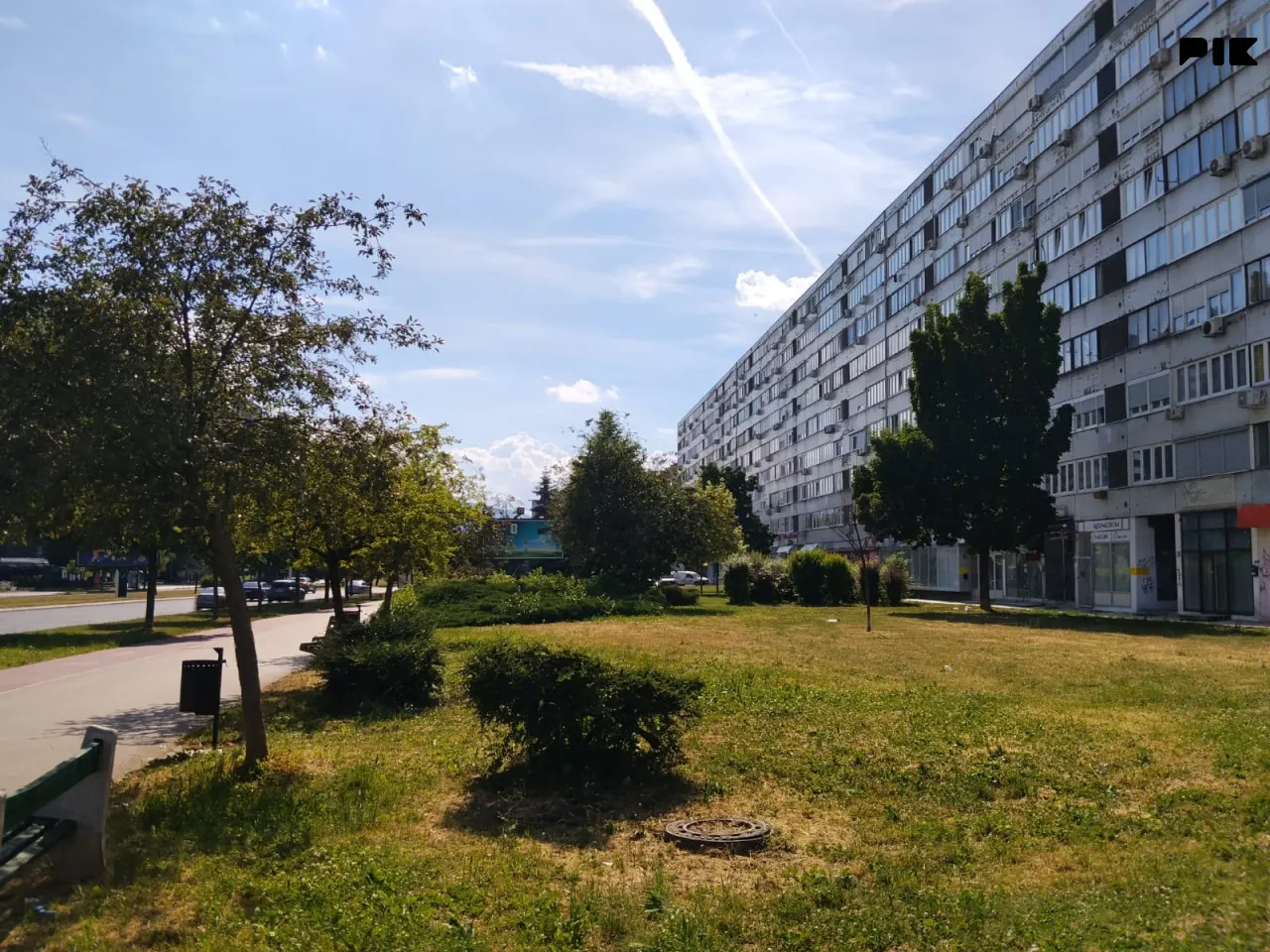
Sarajevo, Čengić Vila
Two-room flat, 54 m², 2nd floor, Čengić Vila - Stometarka
Sarajevo, Dobrinja C5, Novi Grad